Friday, August 2, 2013

Zucchini and Purslane Soup

 
So this soup, of course, uses zucchini.  This time of year there is so much of the stuff that almost EVERY recipe contains the summer squash.  This is a nice cool soup to serve with zucchini bread and eat on the screened in porch just as the sun is setting.  The cooling of the day finally leaves us with an appetite and the fireflies are just starting to wink on as they flirt with each other.  Friends speak in hush tones over this meal as the day fades and night come alive.
 
 
  • 2 cups purslane
  • around 3 pounds zucchini, sliced
  • 1 small onion, sliced
  • 2 or 3 garlic cloves, sliced
  • extra-virgin olive oil
  • thyme--fresh 1 tablespoon, dried 1 teaspoon
  • salt
  • pepper
  • 2 tablespoons shredded basil
  • 3 cups water
  • 2 cups ice
In a sauce pan heat up around 2 tablespoons of olive oil, add onion and garlic, and cook until translucent.  Stir in thyme and heat for about 1 minute.  Add zucchini, season with salt, and cook until the zucchini is tender.  Add the water and bring to a boil, then remove from heat.  Stir in basil.  If you have a stick blender puree until smooth, if not, use your blender and work in batches.  Stir in the ice to cool and then refrigerate.  Chill completely, taste and add any needed salt and pepper.  Ladle this over the purslane and drizzle a bit more olive oil over this.


Pickling Wild Edibles: Purslane


 Mistakes happen and sometimes time moves faster than we do.  Yep, it happens to everyone.  Anyone who has a perfectly clean house or has their lawn at the perfect height or doesn't have weeds in the garden either has help, too much time on their hands, or obsesses waaayyyy too much over what the neighbors think.  I'd like to tell everyone my gardens are always perfect but then you'd know I was lying.  I try my best but sometimes, especially when it is hot or there's been a good amount of rain, the weeds grow faster than I can get to them.

 
This, however, is not the worst thing in the world.  Many of the weeds that are in our garden make some of our best wild edibles.  I'll harvest the nettles that sting me while I'm weeding the cabbage patch to put into a wonderful vegetable broth that I freeze or can for my vegetarian and vegan friends.  I mix lambsquarters with my spinach when I make spinach lasagna.  Chickweed goes into many of my salves as well as any early summer smoothie that I blend.  And, of course, I make one of the three folk wines of North America from the dandelion flower.

It's been almost a week since I've had ANY time to weed the pumpkin patch and it was with a bit of trepidation that I headed out there this morning to begin the long process of removing the tangle of weeds that grows along it's border.  Piles of plants quickly grew, one for the compost pile, one for the chickens, and one for me and my human friends. 

One of the weeds that end up in the "for humans" pile is the purslane.  Purslane is an invasive weed, meaning it did not originate here on North America.  But apparently, like we humans, it found this place to its liking and has not only stuck around but propagated itself to huge numbers.  I have seen some unkempt gardens completely overrun with it.  Since I grow my fields in an organic way, I often have plenty of purslane growing between the rows of planted veggies.


Thing is, if I was smart, I would plant purslane before I planted anything else in my fields and gardens.  Purslane is higher in omega 3 fatty acids than any other plant known to mankind.  Omega-3 fatty acids are vital for normal metabolism. Omega-3s are considered essential fatty acids, meaning that they cannot be synthesized by the human body, we need to get them from somewhere else to survive.  Purslane is also very high in vitamin A, B, C and E, beta carotene, calcium, potassium, folate, lithium, iron and is 2.5% protein. That is huge amount of protein for a plant.  Eating this weed is better for you than eating a salad with lettuce, spinach, cucumbers, carrots and chicken combined.

I'll be eating it in my salad at lunch, making a soup out of it for friends tonight, and pickling as a vitamin packed treat this winter when there isn't anything around but blowing snow and icicles.  Pickling purslane is really, really easy, and totally up to you and your tastes on how to flavor it.

First clean off your purslane.  Because it grows so close to the ground, it is going to get dirty.  No way around that.  Dirty, gritty food is why many of our ancestors lost their teeth before their 30th birthday, so clean it well.  Put the purslane on a towel and pat dry.  You don't need to get off every last bit of moisture but get a good part of it off so you have the right balance of water and vinegar.

 
In a sauce pan bring to a boil a measurement of 60% vinegar (I use our homemade apple cider vinegar) and 40% water.  This is the brine you will be putting over your purslane.  Then pick your favorite flavors.  I am a dill and garlic fanatic myself but my sister loves curry.  Some people love cayenne peppers, others like horseradish. The easiest thing to do is buy pre-mixed pickling spices from the grocery store and put a teaspoon of this into your jars. Really, it is totally up to you.  You can make each jar it's own flavor, label and take notes so you know what your favorite is after you try them.

Sterilize your jars and lids...this is easily done by just setting them into a pan of boiling water for 10 minutes or so. 

Then stuff your purslane and flavorings into the jar, leaving an inch to 1/2 inch of space at the top of the jar.  Put one to 1/2 teaspoon some sort of non-iodine salt on top of this.  If all you have is table salt, feel free to use this.  It won't ruin your pickles, it just MAY discolor them.  I've used iodine salt in pickles before though and they looked fine.  I think people just like to have rules to force onto others so they can tell you what kind of salt to use. 

Okay, enough about salt...After that, pour your vinegar/water mixture over the purslane in the jars, carefully fish out a hot lid and ring from your boiling water, cover it and tighten the ring.  Let set until the lid pops, label and store it on the shelves.  If a jar doesn't pop, that's fine too, put that into the fridge and in two weeks you have a delicious, nutrient packed snack to put on your sandwich.  No matter what, this should sit for at least 2 weeks to blend the flavors.

That's it, you just set aside food for your family and yourself for the winter, and you didn't have to buy it from the store.  You worked WITH nature instead of fighting her, and the earth loves you for it. 

Thursday, August 1, 2013

The Turning of the Wheel; The First Apple Harvest


The year moves on, the seasons change, the wheel turns.  Humans have for a very long time tried to domesticate time, dividing it up, giving names to days and months, numbering each so we know where we are where we were.  Our memories put significance to certain of those labeled days; March 18th, December 25th, September 11th.   We know when Monday comes and we trudge to work, we look forward to the weekends.  We have a time to eat, a time to sleep, a time to worship.  Each year is divided into months, the months into weeks, the weeks into days, days into hours, the hours into minutes, the minutes into seconds.  Yet the uncontrollable time is not phased, it marches on, moving as it always has, in its own way, uncaring of how we try to control it.


One of the reasons that drew me into being a witch is the joy of celebrating time's march.  Some call it "The Turning of the Wheel" and look forward to the next marked holiday on that wheel.  While I do so love celebrating the changings of the season, unlike other witches I do not celebrate dates on a calendar that show the season is changing.  That is beautiful in its own right, but for me it is still trying to make time and the seasons fit what I want, not celebrating them for what they are.  Instead I celebrate events as they come; when maple season starts, when the lambs are born, when the garden is started, when the first apple is harvested...

These do not always fall on the same day.  Nature does not own a watch, nor does she mark days on the calendar.  When she is ready she opens up the next season and does not wait for us to catch up.  It is up to us to be ready for her and not ask her to follow our crude attempts of control.

 
A few days ago as I walked home from the prairies I took a turn through the apple orchard and saw that the first of the apples would soon be ready for picking.  Apples are an important part of this farm, a full 20% of its farm based income comes directly from the orchard.  Without those apples, my taxes don't get paid.  The apples do not ripen and then wait for us to be ready to pick them.  It is time to begin the harvest.
 
I brought the first of the early apples in yesterday; Jersey Mac, Puritan, Duchess. The first bite into a sweet puritan apple is enough to die for.  As much as I think I remember what apples taste like, my memory is nothing compared to that first bite when the juices explode against my tongue.  If the legend of the apple leading us to sin is correct, I sinned big time today. 

 
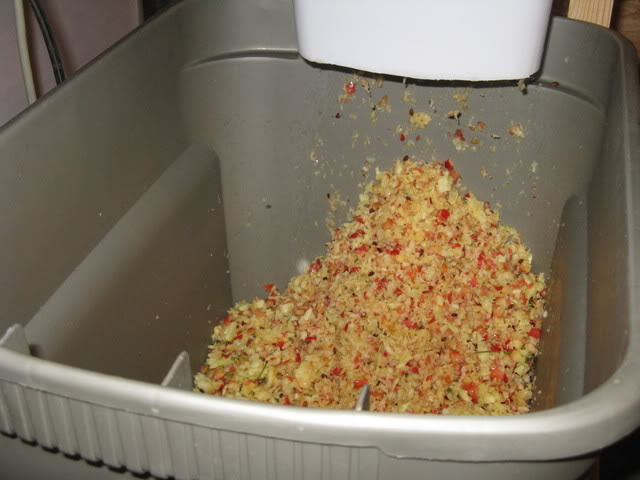
Now, early apples are delicious but they do not store well.  The apples that last the longest in the root cellars are the ones that take the longest to ripen on the tree.  So, for the most part, the early apples are blended and turned into sauce and cider.  Once we make cider we then make ginger/cider soda, cider vinegar, and, for friends, apple jack.  These friends come this time of year to help pick the apples and get ready for the fall sales.  I am so grateful for them as I know I could not get the harvest in without them. 

So this weekend I throw a party for those coming to help.  Food will be spread out, apple jack will be passed around, and we will gather as we have done every year, to celebrate the event of the apple harvest, to celebrate the turning of the wheel.  The summer solstice has come and gone, the days are getting shorter, the pull of preparing for winter in here, and we are celebrating the first harvest as has been done for generations.  This is not symbolism nor an abstract religious gathering.  This is the very real knowledge that through what we are doing, we go on, we continue on this life's path.  For some reason, this makes the harvest even sweeter.


Tuesday, July 30, 2013


Last night sometime, one of the grand old oaks in the woods fell to the earth.  I did not hear it fall, but I heard the barred owl change her hunting patterns.  Instead of hunting for voles down by the creek, she brought her young up into the meadow to hunt rabbits.  I listened to her "who cooks for you" call through the early morning.  Animals change their patterns for a reason and when I went for my morning walk I found the huge oak down across the trail that runs along Rocky Hollow Creek.  The crash must have driven the owls away.


So this morning I spent cleaning up and cutting the oak into stove size pieces that will soon go into the woodshed.  It is the warmth that will keep me going through the coming winter.  All of this got me kinda grimy.  Okay, I was filthy dirty and really sweaty.  Since I was so close to the swimming hole I decided to treat myself to a cool dip at the pond.  Aaaahhh, what a treat. I could swim here all day...except there is still plenty of work to do, work that had been put on hold to clean up the oak.  So to give myself another excuse to swim in the pond I decided to gather a few wild medicinals to take home.  The video above is my attempt to share this with you.

Monday, July 29, 2013

Harvesting on the Prairie


 One of the greatest joys of living where I do is that my farm straddles two very important ecosystems.  The northern part of my farm is part of the great taiga, the forests that once circled the northern tundra of the whole earth.   The southern part of my farm is still held in the remnants of the largest grassland on the planet, the American tallgrass prairie.  The original peoples who lived here traded with each other but developed their own tribal way of life, customs and even languages that limited them to one or the other habitat.  The HoChunk, members of the Siuoxian nations, living a more nomadic existence, following the great herds of bison that roamed the prairie.  The Ojibwa were forest people, living in seasonal camps; maple camp in the spring, wild rice camp in the fall, winter and summer camps where the weather was suited. 

My farm rests at this in between place, this hedge of two worlds, this threshold of nature.  In parts it is ruled by the great forest trees, to walk there is to step into the mysterious darkness.  The plants and animals adapt to this darkness in strange ways.  The prairie is watched over by the blinding sun, there is nothing hidden here.  To escape the heat it is said that 2/3 of the prairie lives underground.  This way the great fires could sweep through and not kill everything, the roots of the plants and the animals that fed from them were insulated by the earth herself.  The prairie is maintained by fire's cleansing--no fire, no prairie.  The cold, darkness of the taiga, the hot, brightness of the prairie; two worlds coming together all around me.

What all these musings means is that I have to adjust my hunting and foraging technics to suit the habitat, but it also means that I have plenty of different resources to work with.  Because it is still cool I have gone to the prairie, to walk in the in the big blue stem grasses with the badgers and the pheasants.  In fact I flushed several small broods of pheasants just walking into the prairie, the young all feathered out and flying.  The fox and coyote of the hills no longer have easy prey with the chicks, their young now have to learn to hunt in earnest or they won't survive the winter.


The most famous wild medicinal of the tallgrass prairie is, of course, Echinacea, or purple coneflower.  The root, when used fresh is an amazing healer, boosting the immune system to help fight everything from the common cold, to infections, to the flu.  My great grandmother gave it to her sons to chew on during the great flu pandemic of 1918 (though it didn't hit here until 1919).  They never got the flu while millions were dying.  The main fact that must be remembered about Echinacea is that it needs to be used fresh or in a very, very strong tincture.  If you don't feel a tingle in your mouth when you use it, the medicine is gone. 

I'm not gathering purple coneflower today though.  I save that as one of the last roots that I gather for the season, just before winter freezes the ground too solid to dig without damaging the shovel.

Today I chose to gather three wild medicinals of the grasslands; blue false indigo, lousewort, and cup plant.  All are plants that demand respect and if not given can make a person quite ill.  In the modern world we often think that if a little of something is good then a lot of something must be GREAT!!!  With medicines, whether they be natural or synthetic, this is a dangerous way of thinking.

 
Blue false indigo is also a wonderful immune stimulant, sometimes given along side or in place of Echinacea. While not as powerful, it's medicinal values last a bit longer than purple coneflower and the root can even be sliced thin and dried to be used in a decoction, which is the safest way to use it.  I also will have people bite down on a piece of dried root if they have sore, infected gums or even a toothache.  Made into a tea, cooled and sipped it can calm an upset stomach and even stop vomiting.  Use only as much as is needed and there aren't problems.


Lousewort grows in many grassland habitats all over the world, going back through the Middle Ages and it was even written about by the Greeks.  Long before garlic was used to ward off vampires, lousewort was planted in churchyard and gateways to protect the faithful from evil spirits that walk the land.  It was grown in most healing gardens and can still be found growing around foundation of old buildings.  It was even believed that wounded animals would search out lousewort to heal themselves. 

Personally I like to stuff the aerial part of the lousewort into a clean jar and cover it with honey.  I let it set in the window for eight weeks or so and then I have a sweet medicine that helps with sore throats, coughs, and even just a cold.  In a few weeks, as the plant dies back, I'll harvest the root.  This I mix with hawthorn berry to strengthen a weak heart or mix with cramp bark and vervain to ease the pain of sore muscles.  I even add it to my ginger, wintergreen, and cayenne pepper massage oil to help ease those pains from the outside in. 


Harvesting from the cup plant this time of year is a bit different than most plants.  Instead of taking leaves, flowers or stems I am harvesting the sap itself. I break off a single leaf from the plant and collect the oozing, yellow sap.  This I let dry until it gets chewy, sometimes even until it gets hard.  Chewing in this sap not only can freshen the breath but swallowing the juices can help with "wet" coughs or coughs that seem to want to produce sputum.  It doesn't actually stop the cough but it does help to break up congestion in the lungs so that the coughing can be productive.  The HoChunk found it to be sacred and drank a concoction of the entire plant to purify themselves before large hunts.  It should be used sparingly, no strong tinctures here or you may upset your stomach.  It's also a fun plant to harvest from just to look down into the "cup" of the plant (where the leaves come together at the stem) to see who has stopped for a sip of water.  I have found many a tree frog swimming contently in this hidden oasis.

By late morning my shoulder bag is full, the ground itself is warming fast, the flowers are buzzing with insects getting on with the business of pollinating.  This time of year, with the prairie in full bloom, this is a magical place.  With no trees, one can see for miles and at the same time can not see their own feet through the thick grass.  I look to the tree line and the great forest that stretches north.  Two world, so different and yet able to live within the shadow and sun of each other for millions of years now.  Perhaps there is a lesson for the human that walks between them; all different, yet all one.  Life is beautiful not because we are carbon copies of each other, but because we are so very diverse.  When one ends, the other begins.  We fill in all the spaces to create an amazing world. 


Sunday, July 28, 2013

Sweet Fern Uses


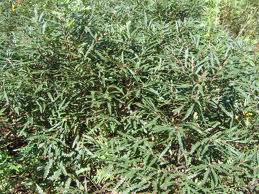
Sweet fern is one of those herbs that is fun to use.  There's no need to apologize when you hand someone a cup of sweet fern tea or when you lead them to a sweet fern bath.  Most people like the flavor and the scent.  It's not like trying to coax them into drinking a cup of barberry root tea.  And drying sweet fern will make your herb room smell wonderful.

What sweet fern is mainly used for is as a wash for itchy rashes like poison ivy or bug bites.  It is easily made into a strong tea then allow it to cool, dip a cloth into the tea and wipe down the affected area.  For larger rashes it is often just easier to pour that strong tea into a bath, giver the person an oatmeal filled cotton bag, and let them soak while rubbing the oatmeal over their skin.  I also powder the dried leaves, mix them with dried plantain leaves and slippery elm bark.  This I keep in my picnic baskets and coolers.  If the bugs bite too badly water can be added to this powder to make a thick paste and smear on the bites to sooth them.  I have had several of these spicy smelling, tiny poultices on my arms when the black flies are biting.  Aaahhh, what a relief.  It works well on bee stings as well.


Rubbing the fresh leaves on the skin acts as a bug repellent in the field and tucking a few leaves into your hat band may even keep the flies from flying around your head.

I do add a bit to any teas that are made to help with long term diarrhea.  It does help to "dry up" loose stool that is persistent and helps other herbs go down a bit easier.  I don't usually try to cure diarrhea for the first day or so because obviously the body is trying to get rid of something, but if it hangs on the person can get too dehydrated and needs to be treated.  A few blackberry leaves or if entrenched blackberry root bark and some sweet fern leaves will usually gently end loose stool.  Add a bit of cramp bark and vervain to settle down cramping muscles and the suffering person can finally rehydrate and rest.

If there are infected sores in the mouth I will again add sweet fern to the gargle to make it more pleasant and to help take down swelling.

Then there's just lining fresh leaves into my berry gathering buckets to keep the berries fresher longer.  I also will put some into a simple syrup or honey to use as flavoring for wines and cocktails. 

 
Nice to gather, to process and to use...I can't see why anyone who can doesn't add sweet fern to their apothecary, if only to spend a few hours in the wild lands, gathering this wonderful herb to spice up a cold winter's night. 

Harvesting Sweet Fern in the High Sands


The morning starts off pretty cold for the end of July.  It is a gentle reminder that summer can not last forever and I had best put up stock for winter.  Yesterday's mist ended sometime in the night and the day starts off quite dry.  It was too cold to head to the bogs to gather up the wintergreen that is dwindling in my herbal room.  Instead I head up...I want to smell that spicy scent of summer, sweet fern on the high, sandy hill.  The hilltops here are treeless, the sand not giving enough nutrients for such a large life form and the lightning fires burning off whatever does make the effort.  The sun is warm here, warm enough to melt winter's snows sometimes.  It almost always feel dry up on the tops of the sand hills, with few plants other than tansies, raspberries, everlastings, and sweet ferns surviving the heat and lack of water.  It is a good place to go on a cool day after the rain.

The deer trail I follow to the top has fresh tracks since the rain stopped.  A large set and a tiny one stepping over the larger one...a fawn following its mother. No bear tracks but then the raspberries aren't quite ripe yet.  Once they are I'm certain I would see my sow bear's sign along the same trail I follow through the thickets as I wind my way to the top.  I make a whistle call just in case to warn her I am coming.  With our Wisconsin bears this is usually enough to send them on their way.  I can hear the drumming of the rough grouse down in the aspens below me.  He isn't drumming as crazy as he was this spring but he is still hopeful the ladies are listening.

I break out of the thickets to the balds or open area at the top of the sand hills.  The predominant plant here is the sweet fern, growing in masses right up to the edge of the lower thickets.  The sun has already warmed them enough to release their heavenly scent.  I strip some of the leaves off a branch of one bush, crushing it to give myself even more scent, then rub it on my skin and into my hair.  It's still too early for the flies to be out and biting but that won't last.  Crushed sweet fern rubbed on the skin will keep them from eating me alive as the sun gets warmer.  It also disguises my scent from the animals, making me smell wild.  I blend in with the sense that counts, the sense of smell means more in the woods that the sense of sight.  We wild ones lift our noses before we lift our eyes.  

I go from plant to plant, stripping a branch here and there, never taking everything from one.  When I get across the bald I look back and can scarcely see where I walked.  Yet my shoulder bag is full to overflowing.  The sun is growing warm against my skin and I am grateful for the northern breeze ruffling my hair.  A redtail hawk screams her hunting cry overhead, waking me up from my meditation of breathing in the wonderful scent of the sweet fern all around me.  It is time to go home and process my herbs, but I do so reluctantly.  My wild self is not so easily harnessed.  She wants to fly with the hawk, sneak through the thicket with the deer, and pound along the trails with the bear.  But my healer self knows I came here for the reason of harvest and I must not let this harvest go to waste.  Winter must be prepared for.  My feet find the deer trail once more and head for home.